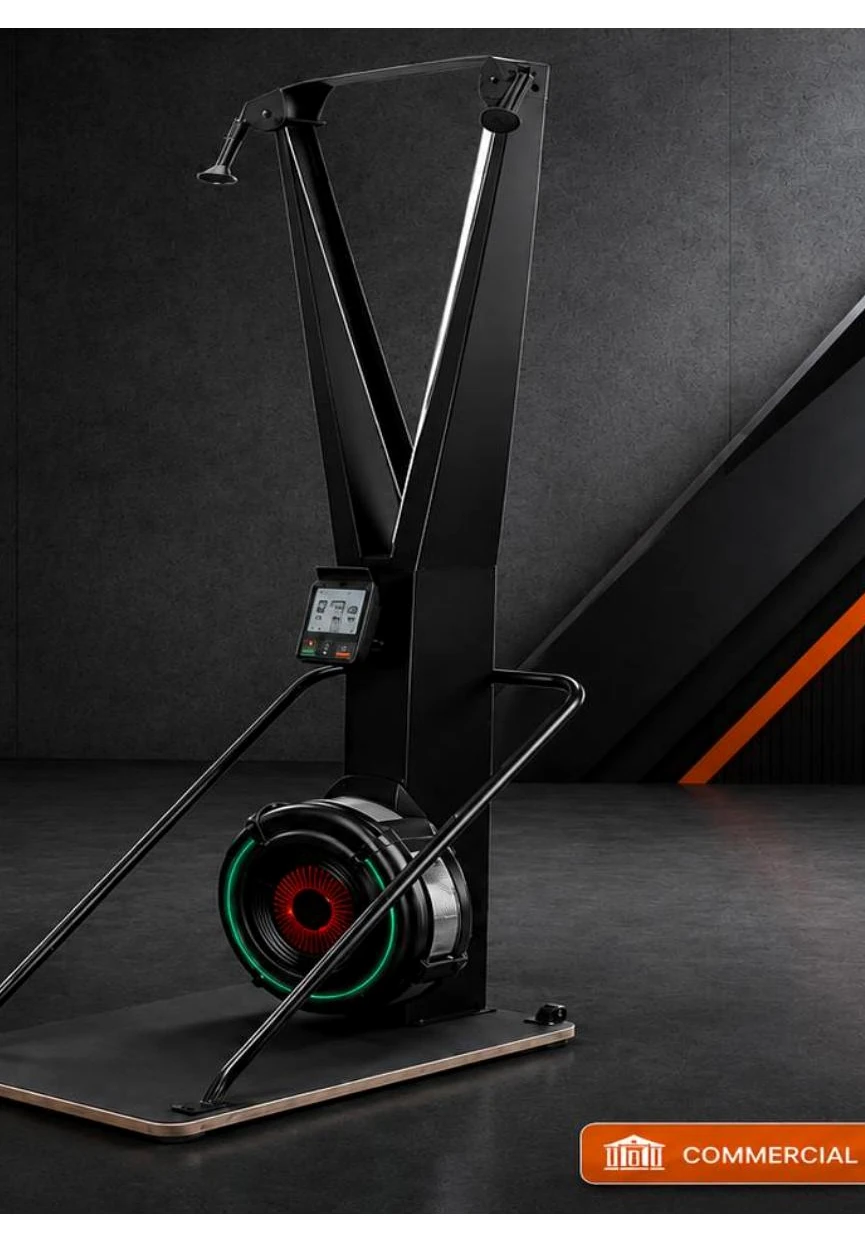
To choose a commercial ski trainer, first confirm the installation configuration and available space. Then compare the resistance mechanism, pulling system, console functions, replacement parts and complete packing list. For importers and private-label brands, approve these details against a sample and a written specification before committing to quantity production.
A similar product photograph does not mean two quotations cover the same machine or accessories. A floor platform, mounting hardware, console or separate accessory carton can change both the purchase price and the freight calculation.
1. Define the buyer and intended use
Start by explaining who will use or resell the equipment. A distributor needs a product that fits its range and can be supported locally. A fitness brand needs an agreed configuration that can be repeated across orders. A gym project needs to confirm the installation conditions, circulation space and service access.
Describe the training environment and expected usage when requesting a quotation. Ask the supplier to confirm suitability and warranty coverage for that use in writing. A commercial label alone does not define the operating conditions or service terms.
Keep this brief practical: destination market, buyer type, quantity, installation preference and branding requirements are enough to begin a useful comparison.
2. Confirm the installation package before comparing prices
Ask whether the quotation includes a freestanding platform, wall-mounting equipment or another installation arrangement. Do not assume these configurations are interchangeable on every model.
| Checkpoint | What to obtain before approval |
|---|---|
| Installation arrangement | Written confirmation of the quoted mounting or freestanding configuration |
| Included accessories | Itemized list of platform, brackets, fasteners and other supplied parts |
| Assembled dimensions | Dimensions for the complete quoted configuration, including the stand where applicable |
| Operating space | Manufacturer’s clearance guidance, user movement space and access for maintenance |
| Installation requirements | Instructions covering the support surface, assembly and any site-specific fixing requirements |
| Packing arrangement | Number of cartons and dimensions and gross weight of each carton |
A machine footprint is only the space occupied by the equipment. It is not the complete training area. Check ceiling obstructions and the space needed for users and neighboring stations as well.
For a wall-mounted configuration, have the proposed wall and fixing method assessed by a qualified installer. For a platform configuration, verify that the quoted package includes the correct base and connection hardware.
3. Separate resistance settings from workout measurement
An air-resistance machine uses a fan mechanism to create resistance. Where a damper is fitted, it changes airflow and the feel of the pull. A numbered setting should not be treated as a calibrated weight or as directly equivalent to the same number on a different model.
Ask the supplier to demonstrate the actual adjustment system and provide the relevant instructions. Check smooth operation at different pulling efforts and across the available settings. Do not assume an air-resistance machine also includes a magnetic system.
Compare console functions separately. Obtain the list of displayed metrics, units, workout modes and power requirements. If connectivity is offered, identify the compatible functions and devices explicitly; a connectivity logo does not explain what data is supported.
For facilities running group sessions, repeatable measurement matters. Ask how readings are calculated and whether comparisons across multiple units have been evaluated. Avoid assuming that results from different brands or models are interchangeable.
4. Evaluate the pulling system and service access
During a sample review, check the handle grip, cord path, pulleys and return action. Both handles should move as intended, return consistently and avoid rubbing or catching during the demonstrated operating range.
Ask for a demonstration at a controlled pace before progressing to the intended training use under the manufacturer’s instructions. Record any uneven return, unusual sound or visible wear for investigation before approval.
The buyer should also be able to identify service parts. Request an exploded diagram or parts list and ask about replacement handles, cords, pulleys, console parts and other service items applicable to the model. Confirm how the parts are ordered and what replacement guidance is available.
5. Make sample approval specific enough to repeat
An approved sample should establish more than the appearance of the machine. Record the model, installation package, console, finish, labels, accessories and instruction version. Photograph the approved details and retain a dated specification.
For a private-label order, approve logo artwork, placement, packaging and manual language before production. Treat structural changes separately from a logo or color request: a changed component or mounting arrangement may need further evaluation.
Agree the finished-product inspection scope before ordering. It can cover assembly, handle return, resistance adjustment, console operation, finish, accessory completeness and packing. Inspection evidence should identify the actual order and the configuration checked. See WCAGO’s quality control approach when preparing the order checklist.
6. Compare the complete delivered package
Request the number of cartons per complete unit, the dimensions and gross weight of every carton, and whether a stand ships separately. This prevents an accessory from being omitted from freight planning.
Compare quotations on the same product, accessory and delivery basis. Ask for the lead time, warranty scope and spare-parts arrangement alongside the price. For destination delivery, have the forwarder confirm the services and charges included for the actual address and shipment.
Use the commercial gym equipment import checklist for the wider order handoff. Keep model-specific technical approval attached to the purchase specification.
Frequently asked questions
Is a floor stand always included with a commercial ski trainer?
No. Ask for an itemized quotation and packing list. Confirm the exact stand or mounting package rather than relying on the product photograph.
Are resistance settings comparable across different ski trainers?
Do not assume so. Adjustment markings, airflow systems and measurement methods can differ. Review the manufacturer’s instructions and evaluate the actual model.
What should an importer approve before quantity production?
Approve the model specification, installation package, console, finish, accessories, labeling, packaging and inspection scope. Keep a dated sample record and confirm commercial terms separately.
What should I send to request a quotation?
Send the quantity, destination, intended use, installation preference and any private-label requirement. Include your delivery basis and note whether a floor platform must be included.
Shortlist the machine, then confirm the configuration
Explore WCAGO’s commercial ski trainer range to start the comparison. For a model-specific offer, request a quotation with your quantity, destination and required installation package. WCAGO can review the product and order requirements for distributors, fitness brands and commercial projects.